
Renowned for its resources and expertise in micro-machining using electrical discharge machining, Vuichard is also equipped with a highly specialised Synova laser cutting machine, which enables it to meet the specific requirements of the medical sector.
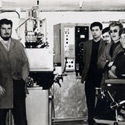
Founded in 1967 by Michel Vuichard, a former employee of the Charmilles Technologies R&D centre (now GF Machining Solutions), the family-run company Vuichard is synonymous with electrical discharge machining. Its subcontracting business began with die-sinking EDM, on which it built its reputation, particularly for the machining of specialised parts. In 1988, the company expanded its expertise to wire EDM, which rapidly grew, then to 5-axis milling, and finally to laser cutting.
The company’s machinery enables it to stand out from the competition through its ability to machine very small parts. Based in Dingy-en-Vuache, between Annecy and Geneva, it caters to the watchmaking industry, but this specialism in micro-machining is also of interest to other sectors, including the medical sector, which accounts for around 15 per cent of its turnover (€1 million, with 9 employees). Examples include the machining of needle tips, gas mixers, shape-memory alloys, and specialised components made from stainless steel, chromium-cobalt, titanium, nitinol and platinum…
As for die-sinking EDM, Vuichard is able to produce electrodes that are almost invisible to the naked eye (7 µm), enabling it to create indentations just 15 µm wide. This makes it possible, in particular, to drill holes in a needle without any cutting effort and without burrs. “It is difficult to find such expertise in Europe,” emphasises Philippe Vuichard, the founder’s son, who has been running the company since 19.
An investment of €600,000
As regards laser cutting, the company did not hesitate to invest €600,000 in acquiring state-of-the-art equipment from the Swiss firm Synova. This machine is based on patented Microjet technology, which utilises a laser beam that is focused and then guided through a water jet as fine as a hair (34 µm in diameter). Complementing electro-erosion, this process has opened up new horizons for Vuichard. It enables the micro-cutting of sheets between 5 and 300 µm thick, and soon up to 600 µm following a forthcoming investment of €230,000.
Microjet technology offers several advantages over conventional laser cutting. When the beam strikes the metal, it turns into a gaseous state and is carried away in the form of microbubbles within the water column. Consequently, there is no heating at the cut, no recondensation, and no liquid residue likely to stick to the material – meaning absolutely no burrs. This is a significant advantage in the medical sector, where the risk of detachable microparticles is strictly prohibited.
“We achieve surface finishes (Ra 0.2) comparable to those obtained using a cutting process based on a femtosecond laser,” explains Philippe Vuichard. And unlike the conventional process, which results in a tapered cut due to the focusing of the laser beam, the cut here is perfectly vertical, making it possible to calibrate cylindrical holes to within a few micrometres. Whilst most of the parts produced to date using this equipment are for the watchmaking sector, Philippe Vuichard is convinced that it can effectively meet the growing demand for miniaturisation in the medical sector, and hopes to see the number of projects in this field increase significantly. “Our company is the only one in France to offer subcontracting services using this type of laser,” he emphasises.
A monitoring tool that’s up to the job
In terms of inspection equipment, Vuichard has primarily acquired optical systems, including the Lynx EVO stereo microscope from Vision Engineering. With the purchase of the Synova laser cutting machine, the company has also invested in a bespoke Marcel Aubert microscope. Its distinctive feature is that it comprises standard equipment (magnification from 60x to 500x) combined with a second microscope offering a shallow depth of field (400x to 2000x). This setup ensures dimensional accuracy, including for mass-production laser cutting.
It is clear that the company’s strategic focus is based on the general trend – particularly in the medical sector – towards ‘ever smaller’ components. At the same time, Vuichard aims to strengthen its expertise in the machining of exotic materials, such as Nitinol – a specialist area for Nimesis Technology (see box) – as well as molybdenum, tantalum, tungsten, rhenium, iridium, niobium, osmium and conductive ceramics. Made from titanium nitride, these ceramics are likely to offer opportunities in the medical sector, provided their biocompatibility is proven.
Vuichard, Nimesis’s partner of choice
Nimesis Technology, a subcontractor based in Lorraine specialising in shape-memory alloys for niche markets, serves the medical sector in particular (20 to 25 per cent of its turnover) by developing innovative products, including pins, staples, surgical knives and highly specialised, bespoke stents. The company has also recently obtained ISO 13485:2016 certification.
Nimesis regularly calls on Vuichard’s services for certain projects, both medical and otherwise. “It’s a company that’s keen on innovative projects, responsive, capable of machining very specialised metals using high-performance tools, and offering excellent technical support,” explains Alain Hautcoeur, director of Nimesis. “When it comes to precision parts requiring a very high standard of cutting, it’s hard to find anyone better.”
Vuichard’s laser cutting process is particularly beneficial for Nimesis as it minimises thermal effects, which can be detrimental to materials such as nitinol.
Vuichard is considering investing in tribofinishing equipment – a process currently outsourced in Switzerland – from companies with expertise in processing small parts.